
Rewrite the Script · Identity and the script
Before You Contend With the World, What's Happening in Your Heart?
Before we contend with what's happening around us, are we allowing God to transform what's happening within us? A reflection on discipleship, truth, and the battle within.
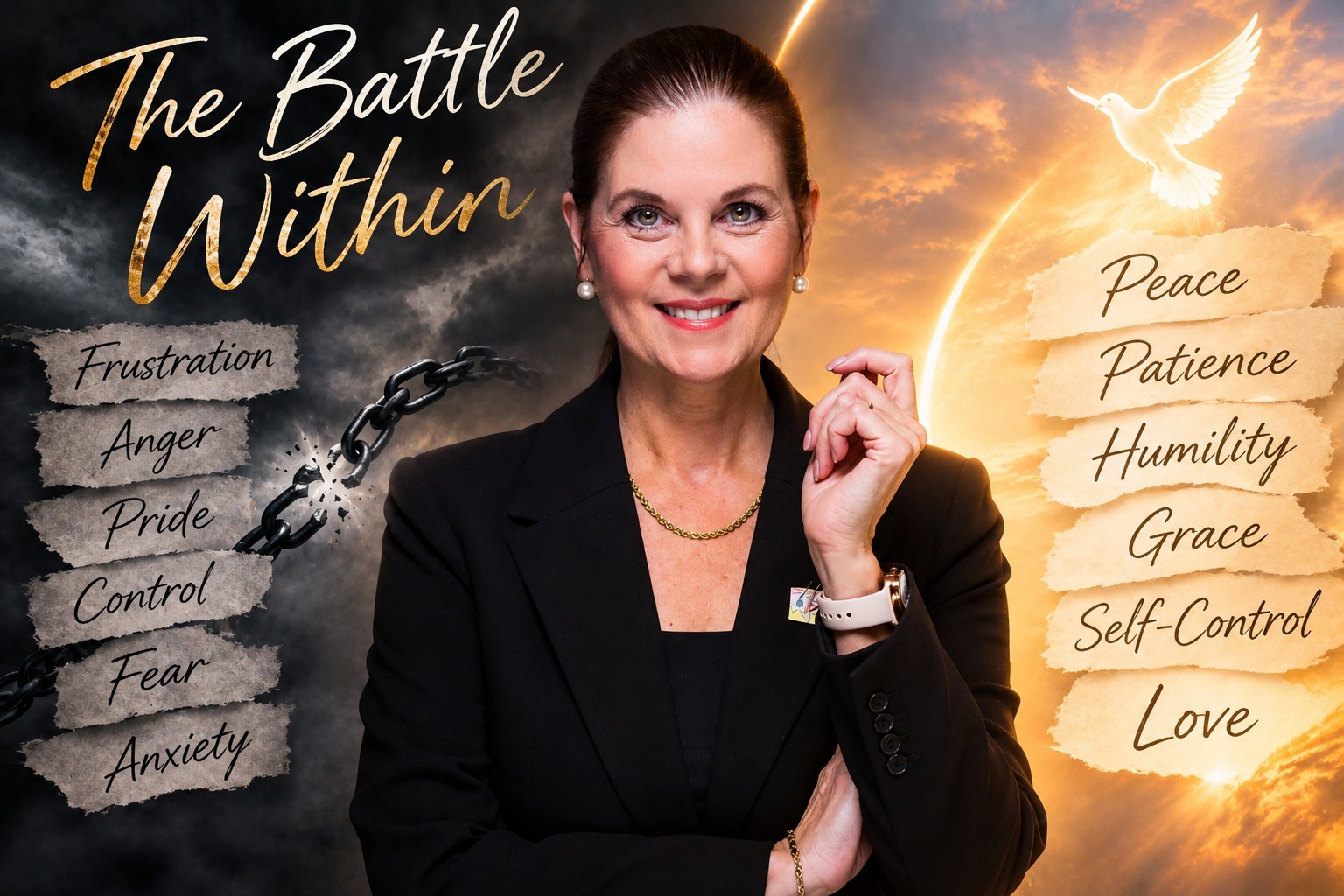
Have you ever noticed how easy it is to recognize what needs to change in someone else? We can identify their attitudes, question their decisions, challenge their beliefs, and sometimes even explain exactly what we think they should do differently. Yet when it comes to examining our own hearts, we may not be quite as eager to look closely.
I've been thinking about this recently as I've been reading CONTEND by Philip Anthony Mitchell. His message about standing firm in biblical truth has challenged me to think more deeply about what it means to live as a follower of Jesus. We are certainly called to stand for truth, but I believe there's another part of that calling we cannot overlook. Before we become consumed with what's happening around us, we need to be willing to examine what's happening within us.
That brings me to a question I've been asking myself: Before I contend with the world, am I allowing God to address what's happening in my own heart?
The Thermometer and the Thermostat
You know I love a good analogy, so let me give you one.
Think about the difference between a thermometer and a thermostat. A thermometer measures the temperature of a room. When the temperature rises, the reading rises. When it drops, the reading drops. The thermometer simply reflects the conditions surrounding it. A thermostat, however, is designed to help regulate the temperature. Rather than merely reporting the conditions, it helps influence them.
Now consider how this applies to our spiritual lives. How often do we allow the atmosphere around us to determine our attitudes, our words, and our responses? Someone says something we don't like, and suddenly our peace disappears. We hear an opinion that challenges our own, and we become defensive. We encounter behavior that frustrates us, and before we know it, we're responding out of emotion rather than allowing the Holy Spirit to guide our response.
In those moments, we're behaving more like thermometers than thermostats. We're allowing the environment to determine our reactions instead of allowing the Spirit of God within us to influence how we respond to that environment.
I believe God calls us to something different. That doesn't mean we compromise biblical truth, avoid difficult conversations, or pretend that everything is acceptable. It means we recognize that the way we represent Christ matters just as much as our willingness to speak about Him. We can stand firm in our convictions while still demonstrating the love, patience, and humility that should characterize a follower of Jesus.
Are We Christians, or Are We Disciples?
Recently, I found myself remembering a little song we used to sing as children. Maybe you remember it, too: I am a C. I am a C-H. I am a C-H-R-I-S-T-I-A-N. I hadn't thought about that song in quite some time, but as I remembered the words, another phrase came to mind: I am a disciple.
That thought stayed with me because it caused me to consider the difference between identifying ourselves as Christians and intentionally living as disciples of Christ. There's nothing wrong with calling ourselves Christians, of course. But have we become so comfortable with the identity that we've overlooked the responsibility that comes with it?
When Jesus called His disciples, He wasn't simply inviting them to agree with His teachings or acknowledge who He was. He was calling them into a relationship that would change the direction of their lives. In Luke 9:23, Jesus explains that anyone who desires to follow Him must deny themselves, take up their cross daily, and follow Him.
That word daily is important. Following Jesus isn't something we do only on Sunday mornings or when we're surrounded by people who share our beliefs. It's a daily decision to surrender our own desires, attitudes, and ways of thinking to His leadership. Sometimes that surrender involves major life decisions, but often it happens in the ordinary moments when we're frustrated, disappointed, challenged, or tempted to respond in ways that don't reflect His character.
And sometimes the hardest thing to surrender isn't our possessions, our plans, or our schedules. It's our need to be right.
The Battle Within
Romans 12:2 teaches us not to conform to the patterns of this world but to be transformed by the renewing of our minds. I've returned to this Scripture many times because it reminds me that transformation isn't simply about changing our outward behavior. It begins with allowing God to change the way we think.
Our thoughts influence our attitudes, our attitudes influence our decisions, and our decisions eventually shape the way we live. If we want our lives to reflect Christ, we have to be willing to examine the thinking behind our actions. That includes the assumptions we've made, the habits we've developed, and even the beliefs we've held for so long that we've stopped questioning where they came from.
This is where I believe we need to be especially careful. We can become so focused on identifying what's wrong with the world that we neglect the work God wants to accomplish within us. We may passionately defend biblical principles while struggling to demonstrate biblical character. We can speak confidently about truth and still fall short in the way we communicate that truth to others.
Galatians 5:22–23 describes the fruit of the Spirit, including love, joy, peace, patience, kindness, goodness, faithfulness, gentleness, and self-control. These aren't simply admirable qualities we should appreciate in other people. They are characteristics the Holy Spirit desires to develop within us as we grow in our relationship with Christ.
I have to ask myself whether those qualities are evident in the way I respond when things don't go my way. It's relatively easy to demonstrate patience when everything is going smoothly. The greater challenge comes when someone tests that patience or when circumstances create pressure. Those moments can reveal areas where God is still working in our hearts.
Discipleship isn't about appearing spiritually mature. It's about allowing God to mature us.
Standing Firm Without Becoming Hard-Hearted
One of the things I appreciate about the call to contend for our faith is the reminder that biblical truth matters. We live in a world where opinions, values, and expectations can shift quickly, and Scripture reminds us that our foundation must remain rooted in Christ.
Ephesians 6:13 calls believers to stand firm. But standing firm in our convictions doesn't mean becoming hard-hearted toward people who see things differently. We can remain unwavering in what we believe while demonstrating grace in how we communicate those beliefs. We can disagree without dishonoring someone, and we can speak truth without using it as a weapon against the very people Jesus has called us to love.
James 1:19 reminds us to be quick to listen, slow to speak, and slow to become angry. Imagine how different some of our conversations might be if we intentionally practiced that instruction. Instead of listening only long enough to prepare our response, we could listen with a genuine desire to understand. Rather than immediately defending ourselves, we could pause long enough to consider whether our words would reflect the character of Christ.
This doesn't mean every conversation will end in agreement. Nor does it mean we should remain silent when truth needs to be spoken. It simply means that our desire to represent Jesus should be greater than our desire to win an argument.
After all, the purpose of discipleship isn't to prove that we're better than someone else. It's to become more like Jesus.
Rewriting the Script
One of the things I've learned through my own journey is that we don't always recognize the scripts we've been living by. Some of those scripts were formed during childhood. Others developed through relationships, disappointments, painful experiences, or even religious traditions. Over time, those ways of thinking became so familiar that we stopped questioning whether they aligned with what God says in His Word.
Perhaps we've learned that being strong means never admitting we're wrong. Maybe we've convinced ourselves that disagreement requires confrontation, or that knowing Scripture is the same as living according to Scripture. We may not consciously recognize these beliefs, but they can influence the way we respond to people and circumstances every day.
This is why renewing our minds is such an important part of spiritual growth. God doesn't simply want us to replace a few undesirable habits with better ones. He wants to transform the thinking that produces those habits in the first place.
James 1:22 challenges us to be doers of the Word and not hearers only. Knowing Scripture matters. Understanding biblical truth matters. Standing firm in our convictions matters. But knowledge was never intended to replace obedience, and obedience requires us to put what we've learned into practice.
I often remind my coaching clients that lasting change begins when we're willing to examine the thinking behind our behavior. The same principle applies to our spiritual lives. If we're constantly reacting with frustration, defensiveness, or anger, perhaps the question isn't simply how to control those reactions. Perhaps we need to ask God to reveal what's happening in our hearts that produces them.
When we allow Him to address the root, we begin to experience transformation that goes beyond temporary behavior changes.
Before We Look Outward, Let's Look Inward
I believe there is a time to contend for truth. There is a time to speak, a time to stand, and a time to refuse to compromise what God has established. But I also believe we must approach those moments with hearts that remain surrendered to Him.
Psalm 139:23–24 records David's invitation for God to search his heart, examine his thoughts, reveal anything offensive within him, and lead him in the everlasting way. I've always found that to be a courageous prayer because inviting God to examine our hearts means being willing to acknowledge what He reveals.
That kind of examination isn't intended to produce shame or condemnation. It's an invitation to grow. God already knows our weaknesses, our struggles, and the areas where we need His help. When we willingly bring those things before Him, we create room for His grace to accomplish the transforming work we cannot accomplish on our own.
And perhaps that's something we need to remember as we navigate a world filled with competing voices, differing opinions, and constant demands for our attention. Our greatest testimony may not be how loudly we defend our faith, but how consistently we demonstrate it through the way we live.
The world doesn't simply need more people who can explain what Jesus taught. It needs people who are willing to follow Him.
Your Next Step
Before you begin another week, I want to encourage you to spend a few quiet moments with God and invite Him to examine your heart. Think about the conversations you've had recently, the situations that have challenged your patience, and the moments when your reactions may not have reflected the person you desire to become in Christ.
Ask yourself whether you've been more focused on correcting others than allowing God to correct you. Consider whether there's an old script, an attitude, or a familiar pattern of thinking that He may be asking you to surrender. And then ask Him to show you one practical way to demonstrate the character of Christ in your everyday life this week.
You don't have to tackle everything at once. Spiritual growth is a journey, and God continues His work in us as we remain willing to follow Him. Start with one honest conversation with God, one surrendered attitude, or one intentional decision to respond differently.
Remember, transformation doesn't happen by accident. It happens as we continually surrender ourselves to the One who created us and allow His Word to shape the way we think, speak, and live.
Before we contend with the world, let's make sure we're allowing God to transform our hearts.
Because being a disciple isn't simply about what we believe.
It's about who we're becoming because of what we believe.
Until next time,
Coach Carole
Church on Sunday. Boardroom on Monday.

Carole Mendoza
Christian life and business coach, speaker and author · Pooler, Georgia
Carole has coached, taught and spoken alongside people through seasons of growth, transition, leadership and change since 2019. She works one-on-one and with leaders and teams, in English and Spanish.
More about Carole →Coaching is where this gets personal.
If you are working through a decision or a season and want someone to think it through with you, the first conversation is free.
See how coaching works